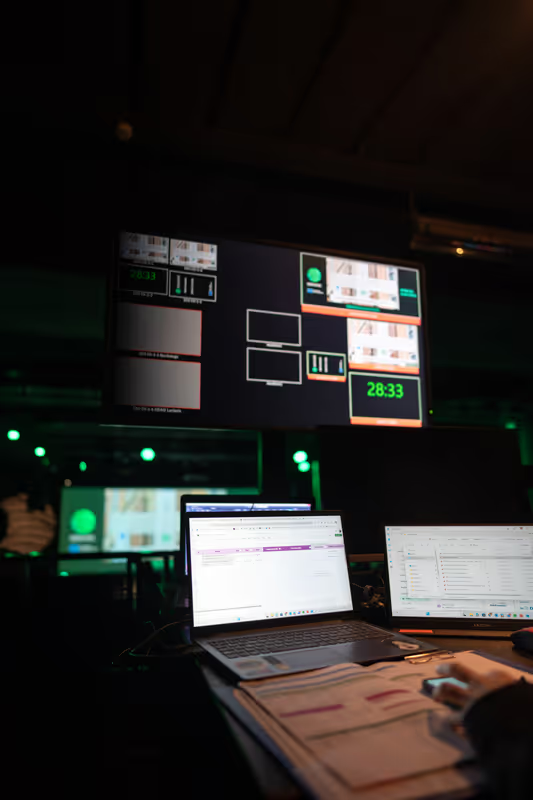
When nobody runs the show, everybody feels it
An event can have excellent speakers, a strong venue and reliable suppliers, yet still feel chaotic. Picture this: sessions starting late, speakers receiving conflicting instructions, technical teams working from outdated information and participants left wondering where to go next.
What could possibly be the problem? Often, it comes down to a series of small gaps between people, responsibilities and decisions. Every supplier may be completing their own tasks, but nobody is connecting those tasks into one coherent operation.
Successful events depend on having a team that understands the full picture and keeps it aligned. That coordination begins well before the first participant arrives and becomes essential once the event is live.
What does event logistics involve on the day?
Event logistics covers everything required to move people, information, equipment and services through the event at the right time. Registration, room access, catering, speaker movements, technical delivery and audience transitions all need to work as part of the same plan.
Each decision can affect several other parts of the event. A delayed session may change a catering schedule, reduce the time available for a room reset and leave the next speaker waiting without clear instructions.
Good event logistics therefore requires more than checking that individual tasks have been completed. It requires someone to monitor how the entire operation is progressing and adjust the plan when one change begins to affect everything else.
Who should be responsible for coordinating an event?
Complex events involve venue teams, audiovisual suppliers, caterers, interpreters, security staff, speakers and internal stakeholders. Each group brings specialist knowledge, but none of them can be expected to coordinate the complete event independently.
One central team should be responsible for connecting the programme, production and participant experience. Suppliers then have a clear point of contact, internal teams know where decisions sit and changes can be communicated consistently.
Central coordination does not mean controlling every detail personally. It means creating clear ownership, maintaining the overall view and ensuring that the right people receive the right information before confusion spreads across the event.
What do on-site and stage managers do?
The on-site event manager oversees the venue operation as a whole. They confirm that rooms are ready, suppliers are in position, signage is correct, registration is functioning and the event team understands the schedule and its responsibilities.
The stage manager focuses on the live programme. They brief speakers and moderators, manage entrances and exits, confirm presentations, coordinate technical cues and keep the stage, backstage area and control room working from the same information.
Both roles require constant communication and calm decision-making. Their work is often invisible to participants because issues are identified and resolved before they become visible disruptions inside the room.
What should be included in an event running order?
A public agenda tells participants when sessions begin. A production running order explains how each part of the event will happen, who is responsible and what every team needs to do before, during and after each programme moment.
It should include speaker arrival times, rehearsals, technical cues, presentation files, stage movements, room changes, catering activity and audience transitions. It should also identify the person responsible for each action and the communication channel used to confirm it.
The running order must allow enough time for the event to function realistically. Programmes that ignore room resets, speaker movement or technical preparation create pressure that continues building throughout the day.
How do contingency plans help an event run smoothly?
Even the strongest production plan will change. A speaker may be delayed, a session may run over time, a presentation may fail or a room may reach capacity sooner than expected.
Contingency planning establishes what should happen before the team is placed under pressure. It defines which sessions can be shortened, whether a speaker can join remotely, who can replace a missing participant and who has the authority to approve changes.
For events happening in the autumn, these decisions need to be made while the programme and production structure are still being developed: now. At haca.studio, we support organisations with production planning, on-site coordination and stage management, keeping the programme, suppliers and participant experience aligned from preparation through to delivery.
Conclusion
Read more
Discover more of our journals, a treasure trove of valuable insights, practical tips, and industry trends that will take your events to the next level.
.jpg)


.jpg)










.avif)