How catering can harm your entire event when it is badly planned
Catering affects much more than what participants will eat. If you don’t get all ingredients right, the result will be an event that is hard to digest. Service format, quantities, staffing, timings, room layout and dietary requirements all influence how smoothly an event runs.
When these decisions are made independently from the wider production plan, catering can create delays, congestion, accessibility issues and unnecessary pressure on the team. Even excellent food will not compensate for poor coordination.
Catering should therefore be treated as part of the event logistics from the beginning, with decisions based on the concept, programme, venue and audience rather than on menu options or price alone.
How should you choose the right catering format for an event?
The catering format should support the purpose and structure of the event. A networking-focused programme requires a different approach from a formal conference, workshop or stakeholder meeting.
The choice between seated service, buffet, standing reception or continuous refreshments affects how participants move, interact and use the space. It can also influence the time required for breaks, the number of staff needed and the overall venue setup.
This is why catering should be selected according to the event concept before comparing packages purely on price. The most economical option is not necessarily the most appropriate once its operational implications are considered.
How should catering be integrated into event logistics and timings?
Catering needs to be planned alongside the programme. The time allocated for coffee breaks, lunch or receptions must correspond to the number of participants, service points available and distance between programme and catering areas.
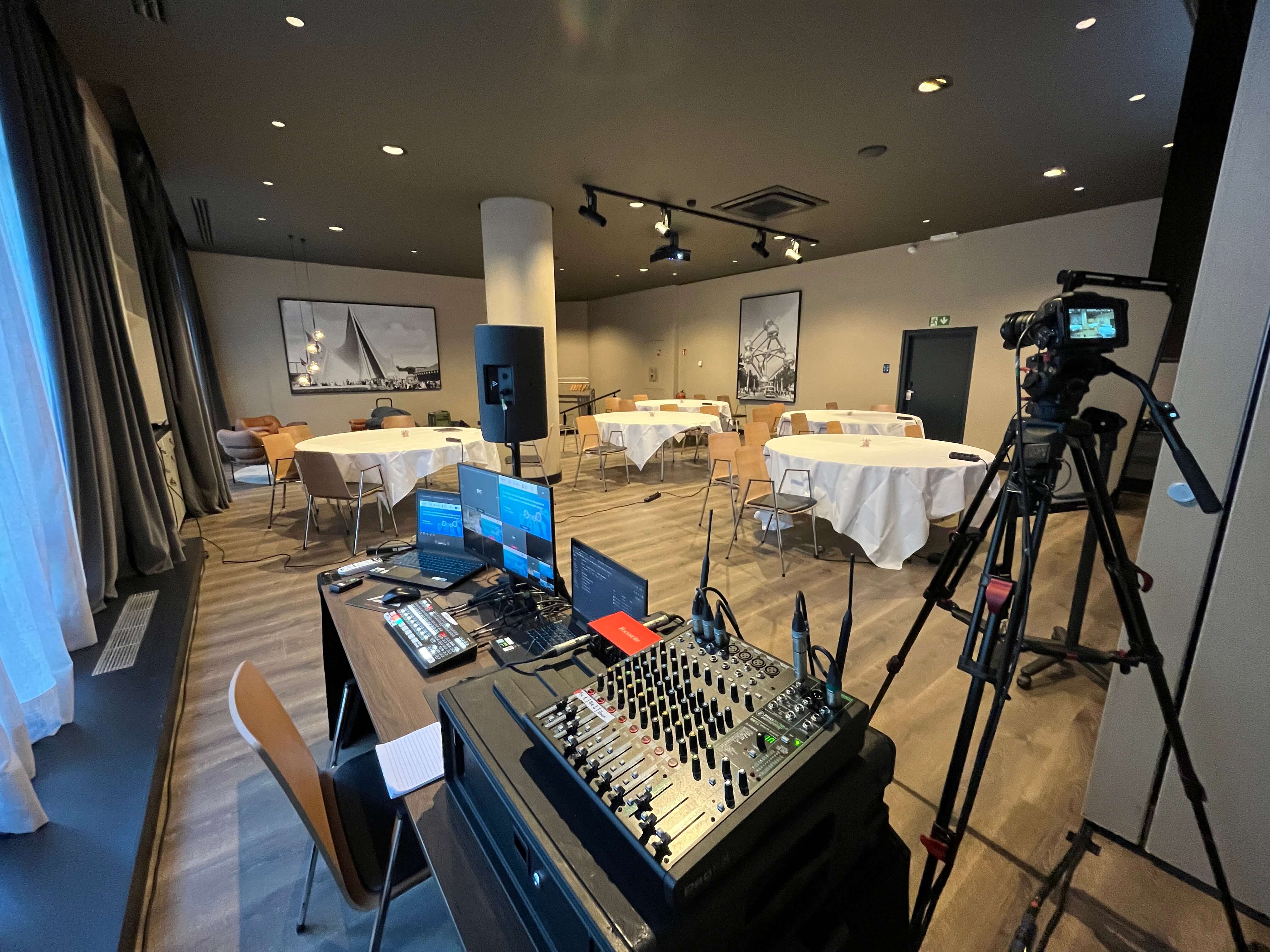
Participant flow also needs to be considered when developing the floor plan. The location and number of buffet stations, bars, tables and seating areas determine where people gather, how quickly they can be served and whether circulation remains comfortable.
These decisions affect the rest of the production. If service takes longer than planned, sessions will start late. If catering areas are poorly positioned, they interfere with movement. Good catering logistics protect the event schedule rather than forcing the programme to adapt on the day.
What should a practical event catering plan include?
A catering plan needs to reflect who will actually attend the event. Participant numbers, dietary requirements, accessibility needs, speakers, VIPs, staff and suppliers all need to be considered when calculating quantities and defining how service will work.
Staffing is equally important. The number of service points means little if there are not enough people to operate them efficiently, replenish food, clear tables and respond to participant needs. Responsibilities between the caterer, venue and event team should therefore be clear before the event.
At haca.studio, we integrate catering into the wider event production plan, connecting the concept with the programme, venue, audience and logistics. This allows organisations to make catering decisions that are operationally realistic and support the event experience as a whole.
Conclusion
Read more
Discover more of our journals, a treasure trove of valuable insights, practical tips, and industry trends that will take your events to the next level.

.jpg)
.jpg)














.avif)