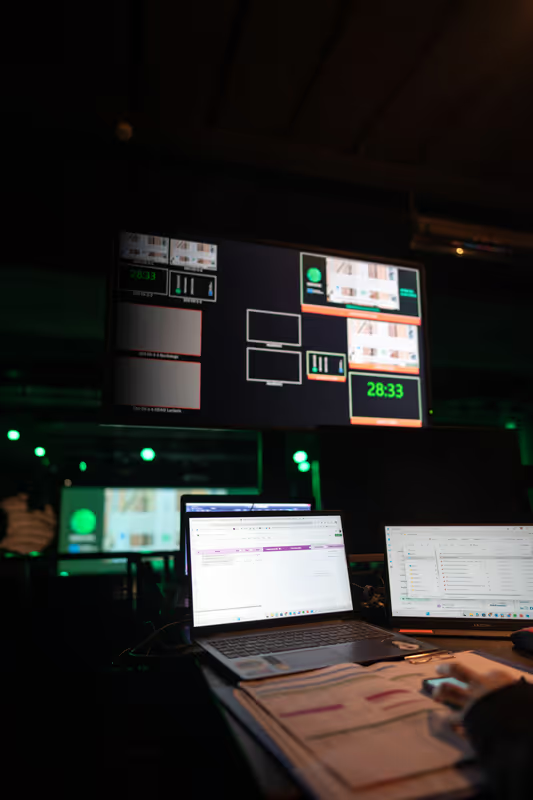
Organising a hybrid event? Why technical setup decisions must be made now
AV, livestreaming, interpretation, lighting, room layout, and speaker requirements are often treated as supplier details, when they should be central decisions to be made well in advance of an event.
Making this mistake is especially risky for hybrid conferences. When onsite and online participation need to work together, technical setup affects the whole experience. It shapes how people listen, speak, interact, move through the room, and follow the programme.
For organisations planning autumn events, summer is the right moment to make these decisions. Not because every detail must already be fixed, but because the event’s ambitions need time to align with operational reality.
Why planning your hybrid event setup as soon as possible is key
A hybrid event is not simply an in-person conference with a camera in the room. Remote participants need to hear clearly, see the right content, follow interpretation, ask questions, and feel part of the event.
That requires early decisions. Will online participants be able to interact? Will remote speakers join live or send a recording? Will slides be shared through the livestream? Will interpretation be available onsite, online, or both?
Each answer affects the format, budget, staffing, room layout, rehearsal plan, and participant journey. When these choices are delayed, the event team often has fewer options and more pressure.
Technical setup is the execution of the event strategy
AV suppliers play an essential role, but they cannot define the purpose of the event for the organisation. Before requesting equipment, the team needs to understand what the technical setup is meant to achieve.
Is the priority a polished broadcast experience, accessible international participation, multilingual discussion, strong photography, high-quality recordings, or a more professional atmosphere in the room?
Without that clarity, AV becomes a list of items instead of a set of decisions. Cameras, microphones, screens, lighting, platforms, interpretation booths, and streaming tools only make sense when they support the event objectives.
Good AV does not always mean expensive AV
A stronger technical setup does not always require a bigger budget. Often, the impact comes from using the available resources more intelligently.
Lighting is a good example. It can be relatively affordable, but it can completely change how an event feels. It improves the stage, helps speakers stand out, supports photography and livestreaming, and makes even a modest venue look more intentional.
The same applies to screens, backdrops, microphones, signage, staging, and printed elements. Sometimes a LED screen is the right choice. Sometimes projection works perfectly well. Sometimes cardboard, a well-designed panel, or a physical backdrop creates more impact than another piece of equipment.
Projection, LED screen, or physical event design?
The choice between projection and LED screens is often made too late. It is not only a technical decision. It is also a visual, budgetary, and strategic one.
Projection can be efficient and cost-effective in the right room, especially when lighting can be controlled. LED screens can create a brighter and sharper effect, especially for larger rooms, livestreamed conferences, and high-visibility events.
But neither option is automatically better. The right choice depends on the venue, the audience, the content, the format, and the desired atmosphere. For some events, a physical backdrop or printed structure may be the smarter option.
Room layout and AV production must be planned together
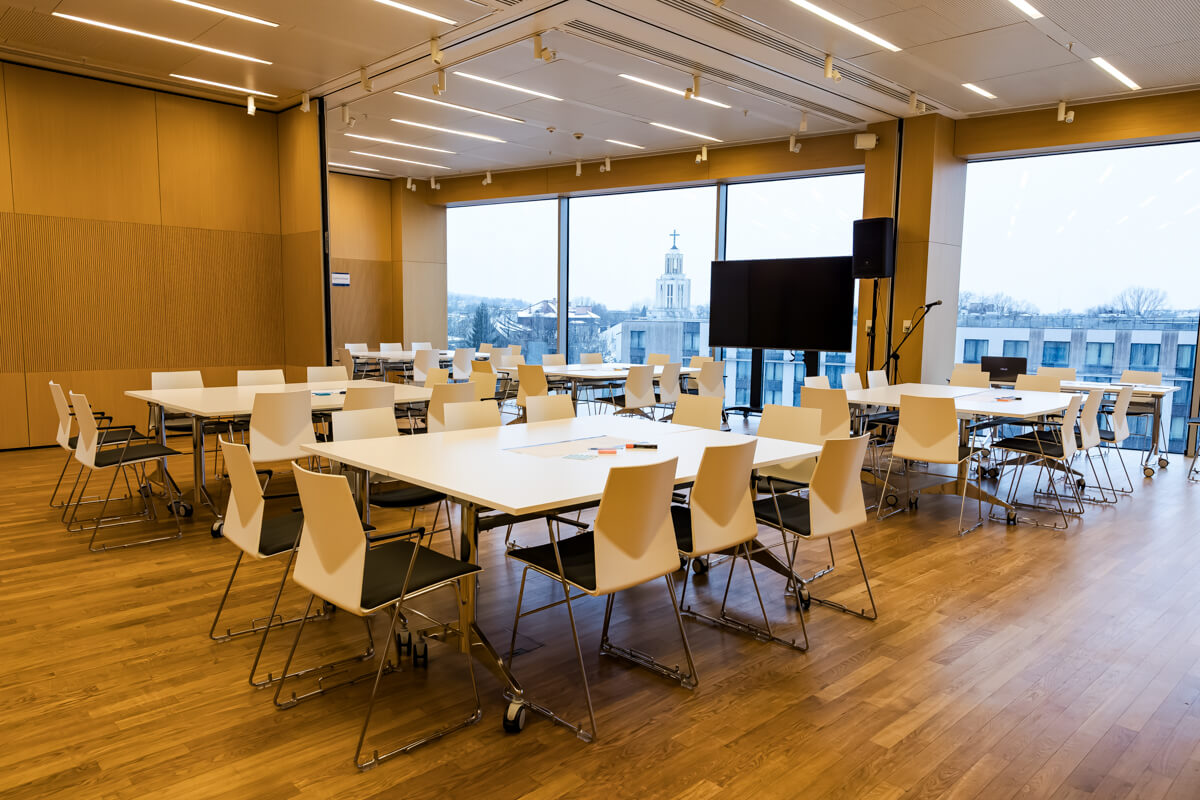
Technical setup affects how the room works. Camera positions influence seating plans. Interpretation booths reduce available space. Screens affect sightlines. Microphones shape how audience questions are handled.
Livestreaming also affects lighting, staging, speaker movement, and rehearsal needs. Cabling, monitors, accessibility, and backstage areas all need to be considered before the room plan is finalised.
When technical planning happens late, the layout often has to be adjusted under pressure. Early planning allows the venue, agenda, audience flow, and AV setup to work together from the start.
Speaker requirements need early technical coordination
Speakers are also affected by technical decisions. Some will present onsite, others may join remotely. Some need slides, videos, microphones, interpretation, confidence monitors, or specific staging arrangements.
If these requirements are collected too late, problems can appear quickly. Slides arrive in the wrong format. Videos fail to play. Remote speakers join without testing. Moderators do not know where online questions will appear.
Clear technical briefings, rehearsal slots, slide deadlines, and remote connection tests are not administrative details. They protect the quality of the programme and reduce stress for everyone involved.
Interpretation, accessibility, and audience engagement
For international conferences, interpretation is often essential. But it affects the whole setup, from microphones and booths to online language channels, headsets, platforms, and timing.
Accessibility also needs early attention. Participants need readable screens, clear sound, suitable room layouts, visible speakers, and online content that can be followed properly.
Audience engagement works the same way. Live polling, Q&A tools, online questions, and hybrid moderation all need planning. The tool itself is rarely enough. The experience depends on how it is integrated into the programme.
Technical event planning in Brussels and beyond
Autumn is a busy period for conferences, institutional events, association meetings, and policy gatherings in Brussels and across Europe. Venues, AV suppliers, interpreters, moderators, and production teams are often in high demand.
Waiting until September to define technical needs can limit availability, increase costs, and create unnecessary risk. Summer gives organisations the time to test assumptions, compare options, review venue constraints, and make better decisions.
For Brussels-based organisations planning hybrid events, early technical planning is especially important. Many events involve multilingual audiences, senior speakers, international participants, policy content, and hybrid access requirements.
How an event agency improves AV decisions
The value of an event agency is often in the decisions participants never see. They may not notice why the lighting works, why the screen is readable, why the speaker looks confident, or why the livestream feels smooth.
Behind that experience are practical choices. Is projection enough? Is an LED screen worth the cost? Would lighting improve the room more than extra staging? Is a printed backdrop more effective than additional AV? Does the layout support both onsite and online participants?
A good agency helps organisations answer these questions early. It challenges unnecessary spending, identifies where technical investment will make a real difference, and helps turn event ambition into a setup that actually works.
Better technical decisions create better hybrid events
Technical setup is not only about equipment. It is about creating the conditions for people to listen, speak, participate, and connect.
For autumn hybrid events, the most important decisions should not wait until the final production phase. They should be made while there is still time to align the format, venue, budget, suppliers, speakers, and participant journey.
The point is not to spend more on AV. The point is to use the right resources in the right way, at the right moment.
Conclusion
Read more
Discover more of our journals, a treasure trove of valuable insights, practical tips, and industry trends that will take your events to the next level.


.jpg)
.jpg)












.avif)