Strategy, tactics and logistics: seeing the whole event picture
Our event advisory service exists for organisations that organise events regularly but do not always have the time, internal expertise, or clarity needed to navigate complex decisions with confidence. It is designed as an ongoing strategic relationship rather than a one-off project, helping teams approach events with structure, reassurance, and a clear sense of direction.
In practice, many of the challenges organisations face when planning events stem from one issue: the different layers of decision-making are not always clearly distinguished. Strategy, tactics, and logistics often become blurred together. As a result, teams move quickly into operational planning while fundamental questions are still unresolved, generating inefficiencies that can drive the costs up significantly and deliver lacklustre events.
Understanding how these three layers interact can change the way events are planned and experienced.
Strategy: defining why the event exists
Strategy is the starting point of any successful event. It defines why the event exists and what it is meant to achieve. For institutions, NGOs, and organisations operating in complex environments such as Brussels, this question rarely has a single answer.
An event might aim to position an organisation as a thought leader, bring stakeholders into a shared conversation, launch an initiative, strengthen partnerships, or create visibility around a policy topic. Without strategic clarity, teams often begin planning before these intentions have been fully aligned.
This is where uncertainty tends to emerge. Different stakeholders bring different expectations, communication teams feel pressure to produce results, and decisions become reactive rather than deliberate. An event can slowly turn into a compromise between competing priorities rather than a coherent experience.
Through event advisory, organisations gain a space for decision validation and stakeholder alignment support. Strategic conversations help clarify whether the event’s objectives, audience, scale, and message genuinely support the broader goals of the organisation. When the strategic direction is clear, the rest of the planning process becomes significantly more stable.
Tactics: choosing the right approach
Once the strategic intention is defined, the next step is translating that intention into the right format and structure. This is the tactical layer.
Tactics determine how the event will actually deliver its objectives. The choice between a panel discussion, a workshop, a closed-door roundtable, or a more experimental format is not simply a logistical question. It is a tactical decision about how people will interact, how knowledge will be exchanged, and how the organisation’s message will be experienced.
In many organisations, this is also the moment when complexity increases. Communication teams consider visibility and audience reach, policy teams focus on the substance of the discussion, and leadership may want reassurance that the event reflects the organisation’s credibility and reputation. When too many stakeholders are involved without a clear decision framework, discussions can become circular.
Event advisory introduces structure to this process. Through regular strategic check-ins and an external perspective that provides a clear planning framework and timeline, organisations can navigate format and budget arbitration with greater confidence.
This helps reduce the fear of making the wrong decision and allows planning to progress with clarity.
Logistics: making the event happen
Logistics form the operational backbone of any event. This is where planning becomes visible and tangible.
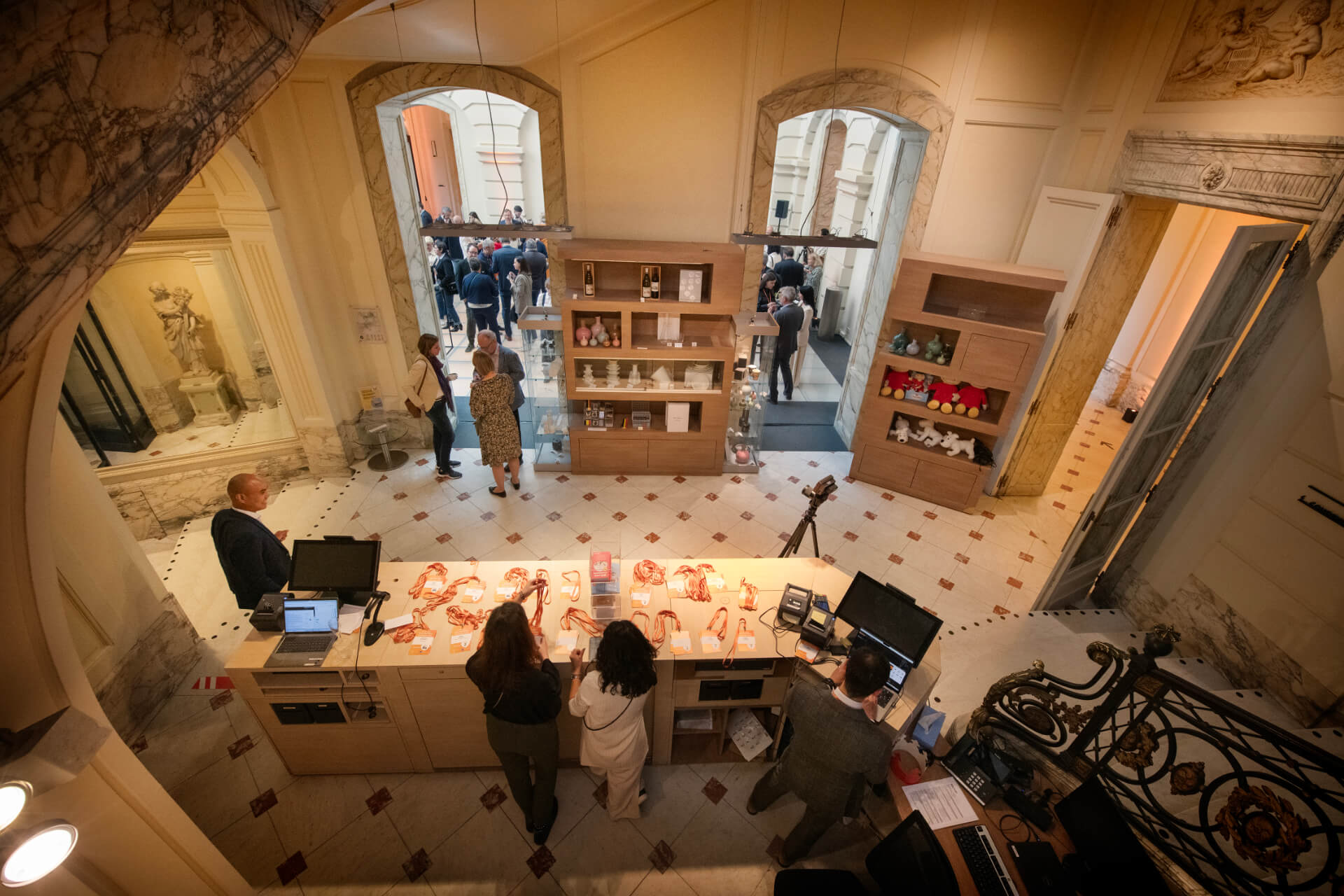
Venue coordination, registration systems, technical production, guest management, catering, timing, and programme flow all belong to the logistical layer. These are the elements participants will directly encounter and the components that determine whether the event runs smoothly.
Many organisations already have strong logistical capabilities. Internal teams and trusted suppliers are often well equipped to handle these operational aspects.
However, even the most capable logistical planning can be disrupted if strategic or tactical questions remain unresolved. Late changes to the programme, unclear expectations from stakeholders, or shifts in format can quickly generate pressure across the entire team. What should have been a manageable process suddenly becomes a source of last-minute stress.
This is one reason why event advisory deliberately remains separate from execution. The role of an advisor is not to run the event itself but to support organisations with decision-making, validation, anticipation, and alignment before logistical planning becomes too advanced. By identifying risks early and clarifying priorities, advisory helps ensure that logistical planning rests on a stable foundation.
Seeing the full picture
Events become easier to design and deliver when strategy, tactics, and logistics are clearly understood as distinct but connected layers.
Strategy clarifies the purpose of the event and the outcomes it should achieve. Tactics translate that intention into the right format, rhythm, and experience. Logistics ensure that everything works in practice and that participants encounter a smooth and well-organised environment.
Event advisory helps organisations see how these layers interact. It ensures that early decisions support what ultimately happens in the room, on the stage, and in the conversations that follow.
For organisations managing frequent events and complex stakeholder environments, this clarity can make a significant difference. Not by taking control of the event process, but by providing the strategic perspective that allows teams to move forward with confidence.
Conclusion
Read more
Discover more of our journals, a treasure trove of valuable insights, practical tips, and industry trends that will take your events to the next level.
.jpg)



.jpg)











.avif)