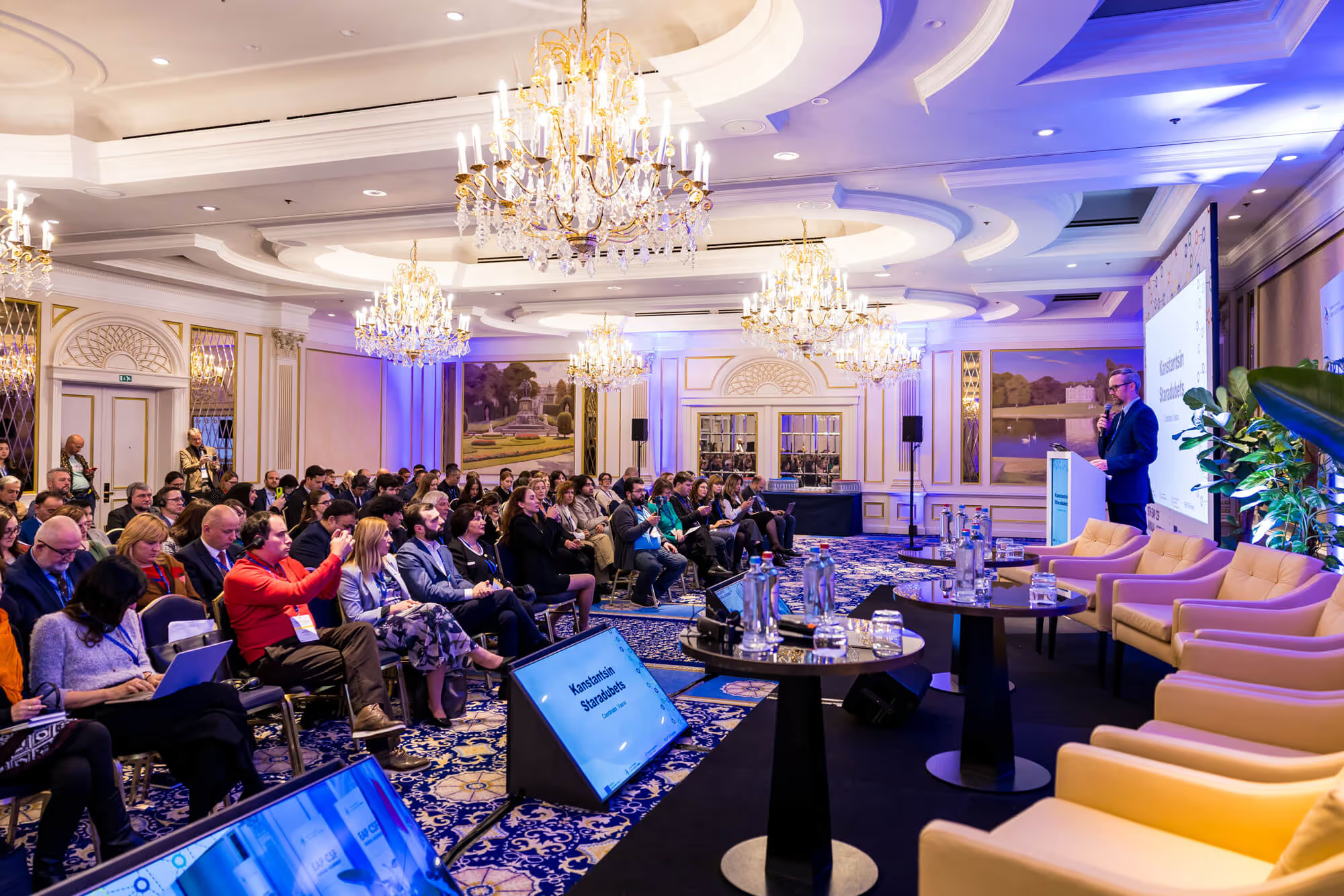
Great event content is being wasted because nobody planned how to use it afterwards
Imagine bringing together some of the most knowledgeable people in your field, facilitating discussions around important challenges, presenting months or even years of research and generating valuable exchanges between experts, policymakers and stakeholders, and then letting the opportunity to create content during the event go to waste.
This is surprisingly common in the world of institutional events.
Organisations invest considerable time, money and resources in developing programmes, securing speakers, attracting relevant audiences and creating the right conditions for meaningful conversations. Yet, once the event is over, the communication often comes down to a selection of photographs, a thank-you email and a LinkedIn post celebrating its success.
Meanwhile, valuable insights, expert perspectives, audience questions and emerging ideas remain within the walls of the conference room.
The problem usually begins long before the event takes place, when content production and distribution are treated as secondary considerations rather than integral elements of the event strategy.
Why does it make sense to plan content creation around your event?
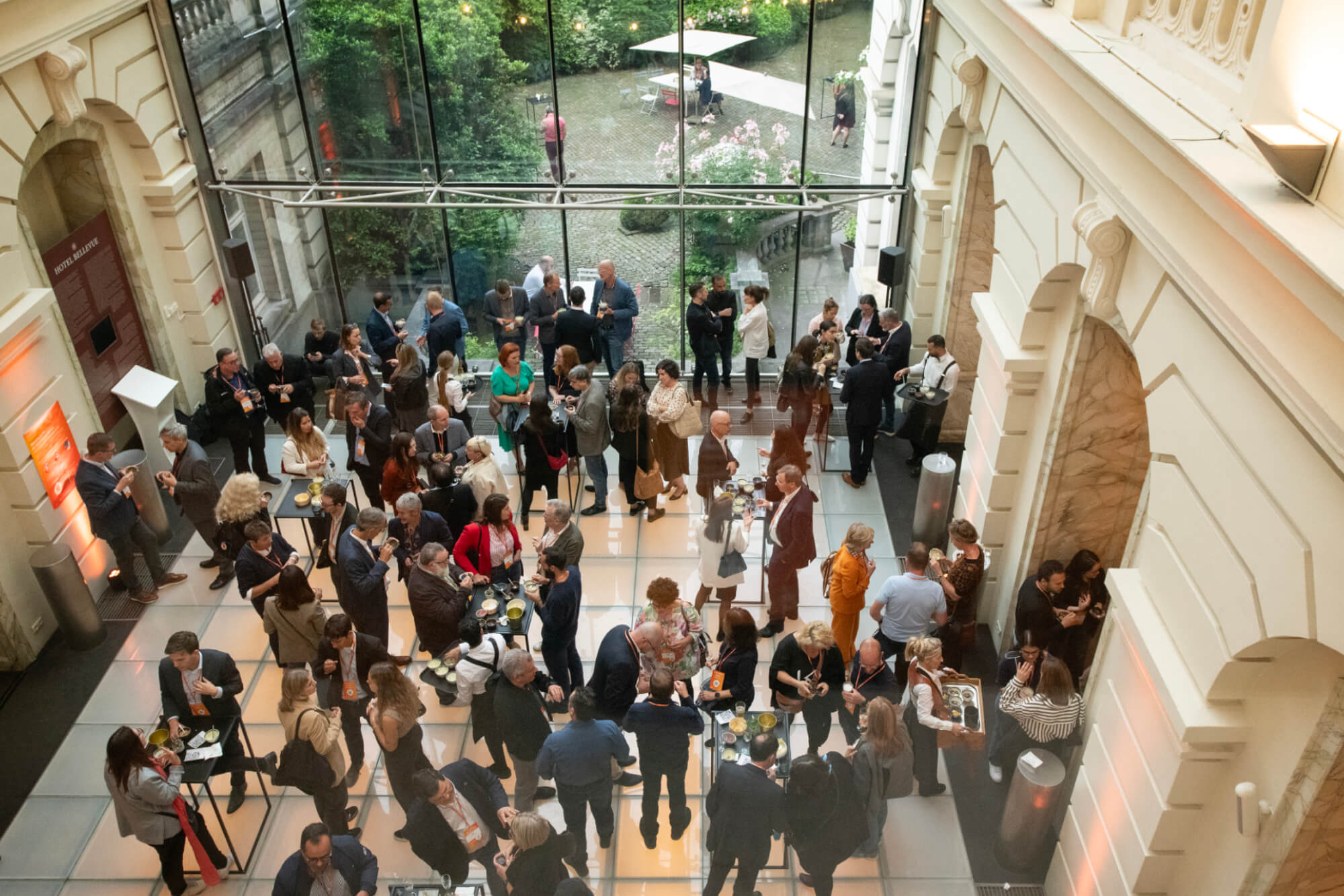
For organisations operating in the institutional landscape, particularly in Brussels, events represent an extraordinary concentration of knowledge, expertise and stakeholder perspectives that would otherwise be difficult and expensive to bring together.
Think about how much effort your communications team would normally need to coordinate interviews with ten international experts, gather perspectives from policymakers or produce original content around new research findings. During a conference, these people, resources and opportunities are already concentrated in the same place.
There is also a financial and operational advantage. Your organisation has already invested in bringing speakers from different countries, securing a venue, setting up audiovisual equipment and mobilising internal and external teams. With some additional planning, this infrastructure can also support the production of content that would be considerably more complicated and costly to organise independently.
Beyond the content generated naturally through the programme, events offer an opportunity to produce original material specifically designed for your wider communication objectives. Having access to experts, partners and stakeholders in person creates possibilities that are difficult to replicate through everyday communication activities.
This is particularly valuable for NGOs, associations, research organisations and international institutions whose communications teams often operate with limited resources while being expected to maintain visibility, disseminate knowledge and engage their communities throughout the year.
By integrating content creation into the event strategy, organisations can increase the return on their existing investment, reach audiences beyond those attending the event and build a valuable editorial resource for future communication activities.
What kinds of content can you create during an event?
The possibilities extend considerably beyond event photography, highlight videos and recordings of presentations. Depending on your organisation's objectives, audience and communication channels, an event can become an environment for producing a wide variety of original content.
Quote cards and video interviews with speakers, for instance, can explore topics that deserve more attention than the programme allows. Short expert explanations can make complex policy developments or scientific findings more accessible to wider audiences. Conversations between professionals with complementary perspectives can become podcast episodes, while interviews with participants can provide valuable insights into the challenges and expectations of your community.
There is also considerable editorial potential within the programme itself. A particularly insightful contribution during a panel discussion could become the starting point for an article. Questions raised by participants could inspire a series of educational posts or a FAQ resource. Discussions across several sessions could form the basis of a thematic publication, while research presented during the conference could be translated into infographics, visual explainers or downloadable resources.
Events can also provide an opportunity to create content that is not directly related to the programme. An association bringing together its members from across Europe could record member testimonials, produce interviews about ongoing projects or gather perspectives for an upcoming communication campaign. A research organisation could use the presence of international experts to produce a series of educational videos addressing questions relevant to its field.
Some of the most valuable content may therefore come from activities deliberately organised alongside the main programme. A dedicated recording space, a small editorial team and carefully scheduled interviews can effectively turn part of your event into a temporary content production studio.
The choice of formats should ultimately reflect what your organisation wants to communicate, who it wants to reach and how those audiences engage with information. Producing a smaller selection of well-designed, relevant content can deliver considerably more value than accumulating hours of footage without a clear purpose.
How do you plan content creation ahead of your event?
Effective event content production begins with an editorial strategy, ideally developed alongside the event concept and programme.
What conversations does your organisation want to continue after the event? Which messages deserve greater visibility? Who are the audiences you want to reach beyond the people attending in person? What knowledge could be made more accessible, and which formats would best serve these objectives?
The answers should inform a content production plan that identifies the material to be created, the people involved, the resources required and the intended distribution channels. This plan needs to be integrated into the wider event preparation process, as many editorial decisions have direct operational and technical implications.
If expert interviews are part of the strategy, time needs to be allocated in speakers' schedules, questions need to be prepared and a suitable recording environment needs to be identified. If the objective is to produce podcast episodes, the venue needs to accommodate a quiet recording space with appropriate equipment. If short educational videos are intended for different digital platforms, the production team needs to understand the required formats, framing and technical specifications.
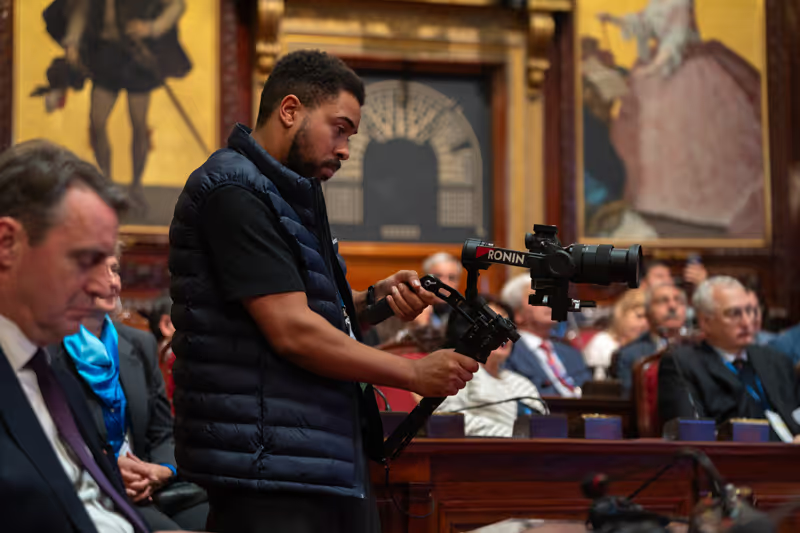
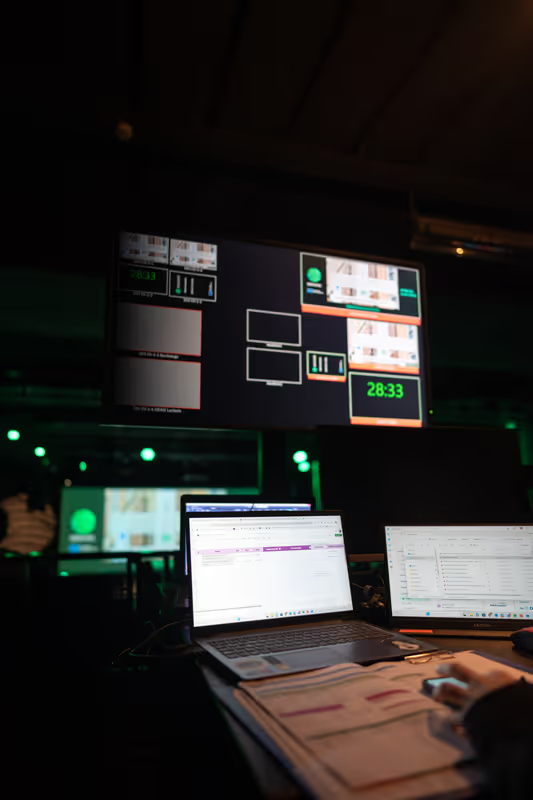
Recording an event for live streaming, for example, does not automatically produce footage suitable for subsequent communication campaigns. Camera positioning, audio quality, lighting, resolution and access to individual audio or video tracks can all determine what the communications team will be able to produce afterwards. These requirements need to be discussed with the audiovisual team before technical specifications are finalised.
Permissions and publication rights also need to be anticipated. Recording, editing, quoting and publishing contributions across different channels may involve different permissions, confidentiality requirements, intellectual property considerations and institutional approval procedures. Addressing these early can prevent valuable material from becoming unusable after the event.
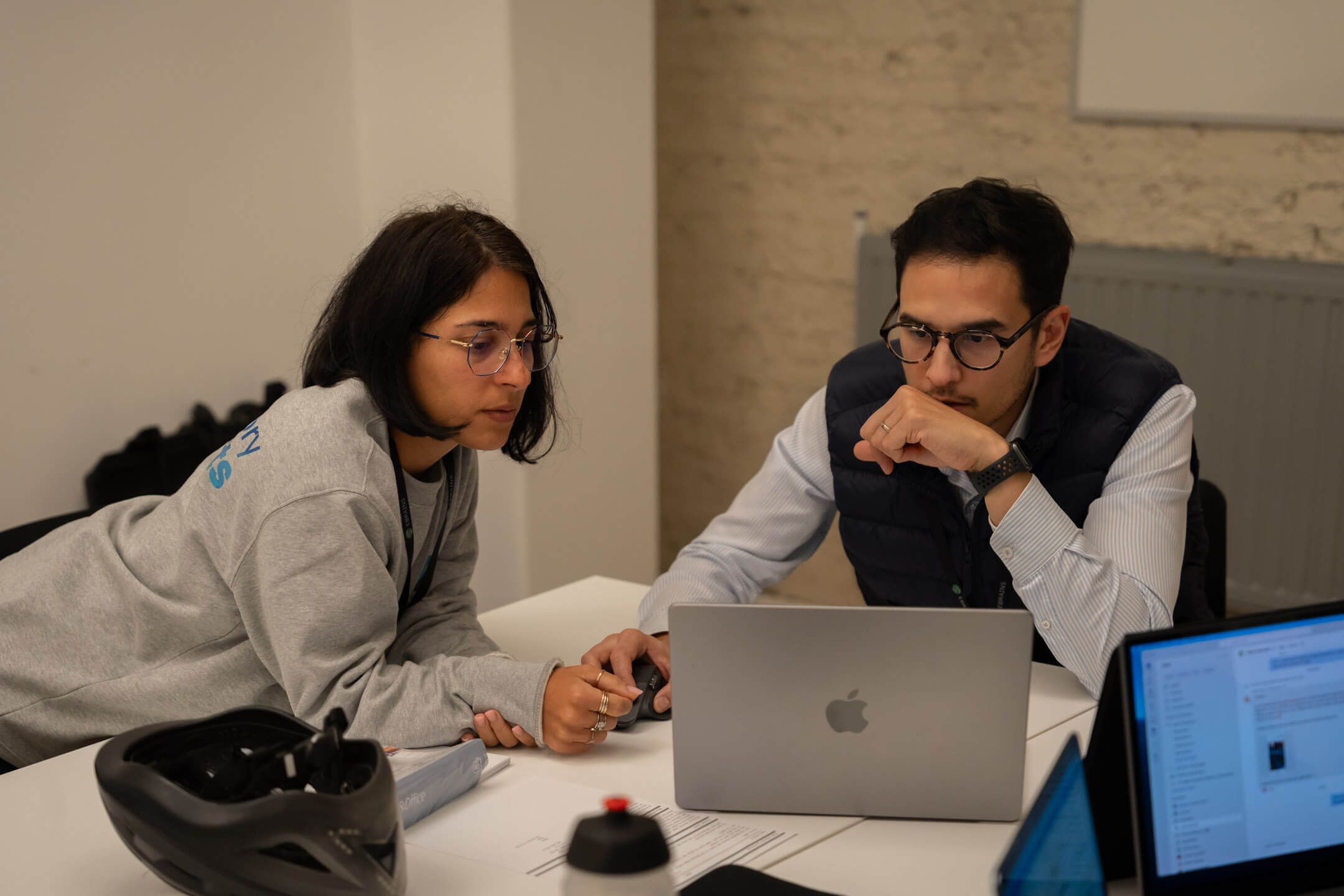
Finally, someone needs to take responsibility for the editorial process during the event. While the operational team is focused on delivering the programme, someone should be identifying particularly relevant contributions, documenting emerging themes, coordinating interviews and recognising unexpected content opportunities.
All of this needs to be reflected in the event budget, production schedule, supplier briefings and allocation of responsibilities. Content creation should be treated as a dedicated workstream within event preparation, with its own objectives, resources and deliverables.
How can you turn your event content into a long-term communication campaign?
The days immediately following an event are an obvious opportunity to communicate while the experience is still fresh in participants' minds. However, concentrating all post-event communication within that short period can significantly limit the potential reach and impact of the material produced.
Different pieces of content have different lifespans. An announcement or a summary of the event may be time-sensitive, while an expert explanation, a research finding or a discussion around a recurring societal challenge can remain relevant for months or even years.
A well-designed editorial calendar takes these differences into account. The immediate follow-up can focus on key outcomes and participant engagement, while subsequent communication can explore individual topics in greater depth, introduce different expert perspectives and gradually release the original content produced during the event.
Rather than publishing ten expert interviews within two weeks, for example, an organisation could develop a thematic video series distributed over several months. Each episode could be accompanied by an article, a newsletter feature or complementary social media content, creating multiple opportunities to engage different audiences around the same subject.
Event content can also be integrated into communication activities that are already planned throughout the year. For an organisation working on European policy, insights from a conference could be revisited when a relevant consultation opens, a new report is published or the subject returns to the institutional agenda. For a research organisation, presentations could become educational content that supports an ongoing knowledge dissemination campaign. For an association, expert contributions could support member engagement, outreach activities and the promotion of future initiatives.
Distribution should also extend beyond the organisation's own communication channels. Speakers, institutional partners, participating organisations and professional networks can help bring the content to new audiences. Providing them with ready-to-use communication materials can make this process easier and considerably expand the reach of the original event.
This approach also requires clear editorial ownership, realistic production timelines, an organised content library and a dedicated budget for editing, design, publication and distribution. Capturing valuable material is only useful if the organisation has the capacity to process and activate it afterwards.
It also changes how we evaluate event performance. Alongside attendance, participant satisfaction and engagement during the event, organisations can measure the reach of subsequent content, engagement with specific topics, traffic towards relevant resources and the new opportunities generated through continued communication.
The event can effectively become a source of content that feeds the organisation's communication strategy throughout the year, rather than an isolated moment of visibility.
How can haca.studio help you maximise the communication value of your event?
haca.studio approaches event communication and event production as interconnected activities. The decisions we make when designing an event directly influence the communication opportunities available before, during and after it takes place.
We help organisations identify these opportunities from the earliest stages of preparation, exploring what kinds of content could be created, which formats would best serve their objectives and how content production could be integrated into the event without compromising the participant experience or the delivery of the programme.
From developing the editorial concept and identifying interview opportunities to coordinating audiovisual requirements, production schedules, speaker briefings and permissions, we bring the different elements together within a coherent event and communication strategy.
We can also support the development and execution of post-event communication campaigns, helping organisations structure their content, adapt it to different audiences and channels, and distribute it in ways that support their wider communication objectives.
Every event has a different communication potential. Our role is to help you identify where that potential lies, propose the right creative and technical solutions and establish the conditions to make effective use of it.
You have already invested in bringing the right people together, developing meaningful conversations and generating valuable knowledge. Why limit the return on that investment to the people who happened to be in the room?
With the right event communication strategy, a conference lasting two days can provide your organisation with months of meaningful, original and relevant communication.
Conclusion
Read more
Discover more of our journals, a treasure trove of valuable insights, practical tips, and industry trends that will take your events to the next level.