Event communications: how, when and where to communicate with guests
Event communication is often treated as a logistical checklist. A confirmation email, a reminder, a last-minute update when something changes.
For guests and participants, though, communication is central to any event. Long before they arrive and long after they leave, what they receive, when they receive it, and where they find it shapes how prepared, confident, and welcome they feel.
This is why we approach event communication as a journey designed to feel like a smooth flow that supports people at every stage of the experience.
Designing communication as a journey
We start from the guest’s perspective. At each moment, we consider what information is genuinely useful, what can wait, and what helps people feel guided rather than overwhelmed. This applies whether we are working on a large institutional conference, a public-facing event, or a more intimate gathering.
Communication is never neutral. Tone, timing, and channel all signal what kind of experience guests are stepping into. That is why communication decisions are part of event design from the very beginning, not an afterthought added once logistics are final.
Before the event: from visibility to preparation
Before the event, communication often has two roles. One is practical, helping registered participants understand what to expect. The other is strategic, helping the event reach the right audience in the first place.
When events aim to attract a broader or more diverse audience, communication may start well before invitations are sent. Social media content, newsletters, and targeted advertising can all play a role in building awareness, explaining why the event matters, and encouraging registration. In this phase, clarity and relevance are key. People should quickly understand what the event is about, who it is for, and why they might want to attend.
.png)
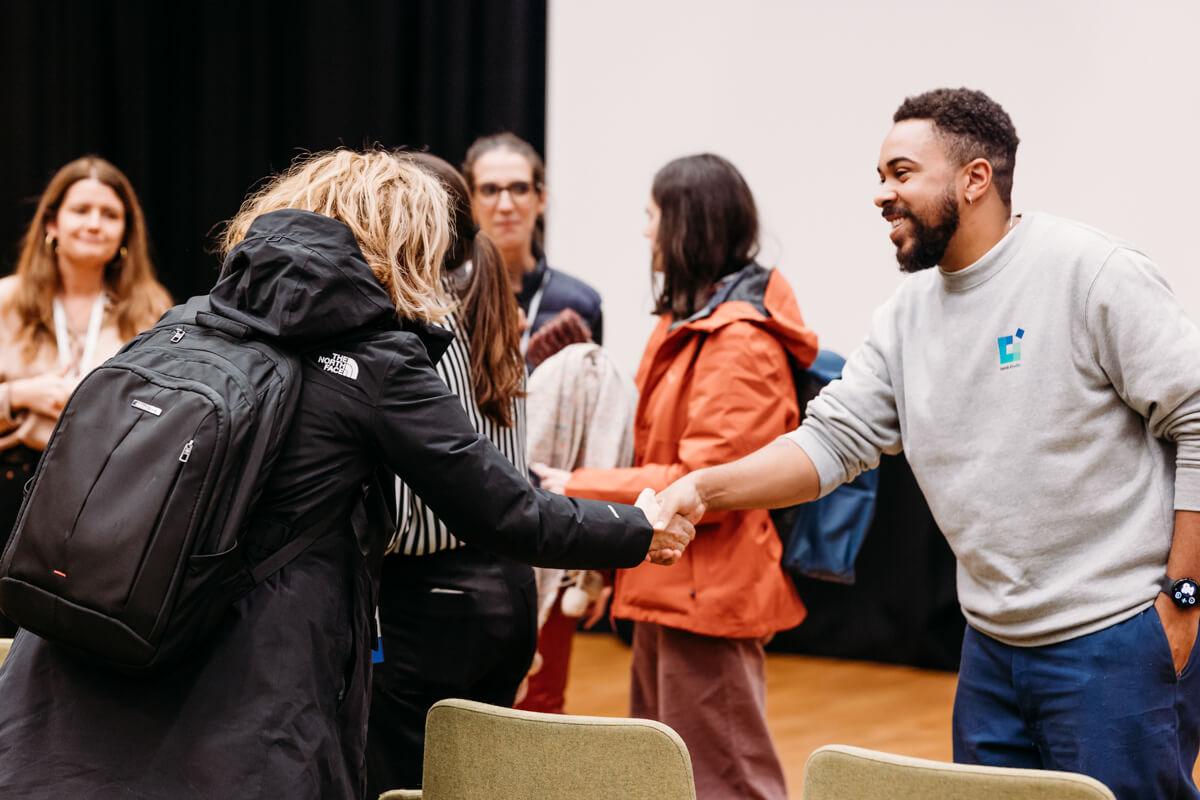
Once people register, communication shifts. Messages become more personal and more focused on preparation. Rather than sending all information at once, we structure it in stages. Early messages establish the purpose and tone of the event. Practical details follow closer to the date, when guests are more likely to engage with them. This avoids overload and reduces the familiar stress of searching through emails for one essential detail.
Visual identity and language already matter here. Invitations, registration confirmations, and practical information should feel aligned with the experience to come, not like generic administrative messages. Sustainability adds another layer to the question. Fewer, lighter messages are not only easier to process, but they also reduce environmental impact and reflect more thoughtfully on your organisation.
During the event: orientation and live activation
When the event begins, communication becomes immediate and situational. Guests are no longer planning ahead; they are navigating the present moment.
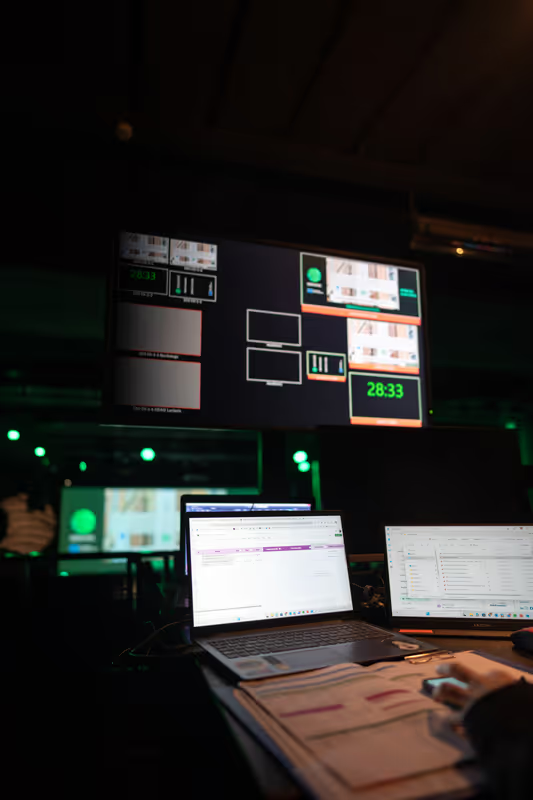
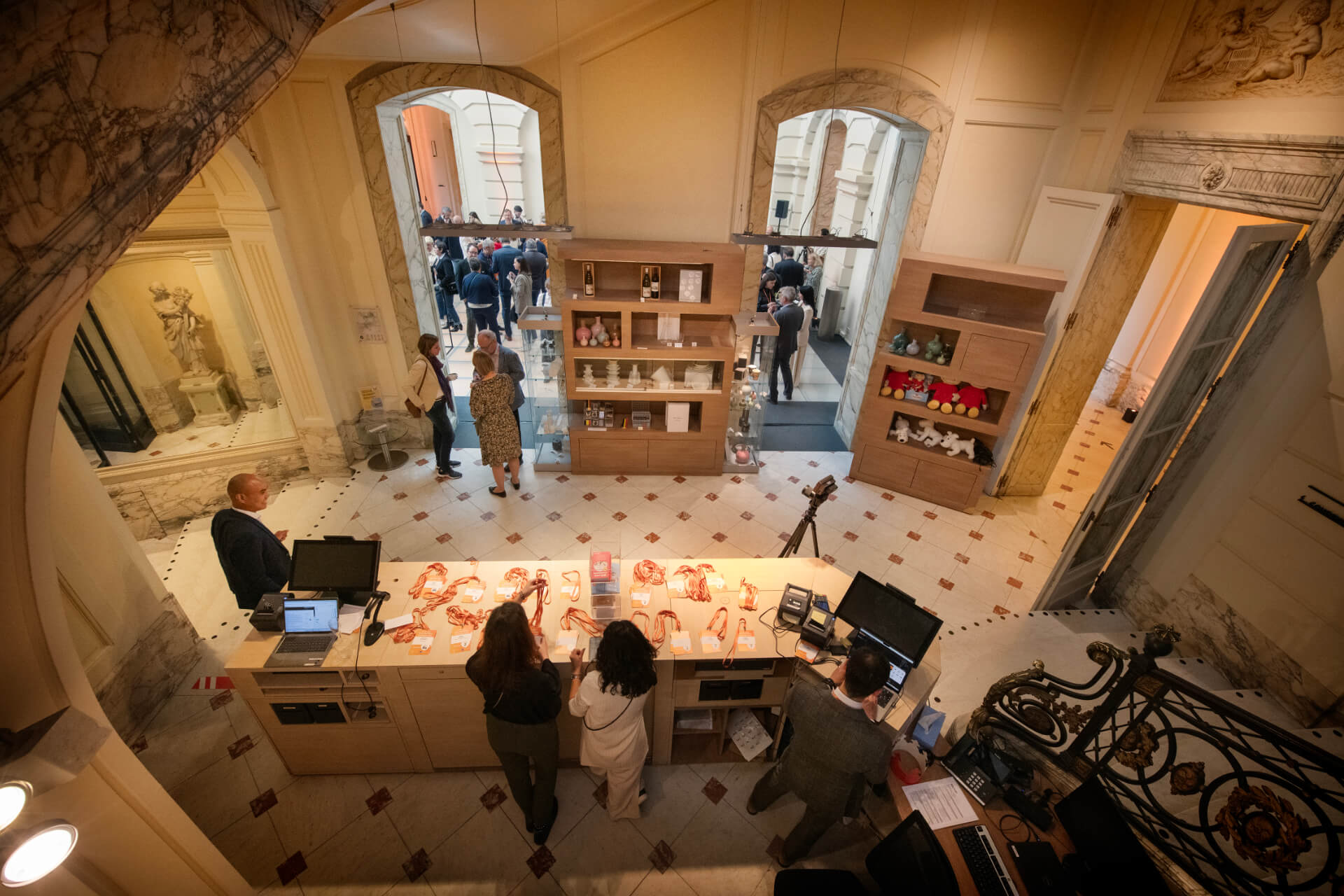
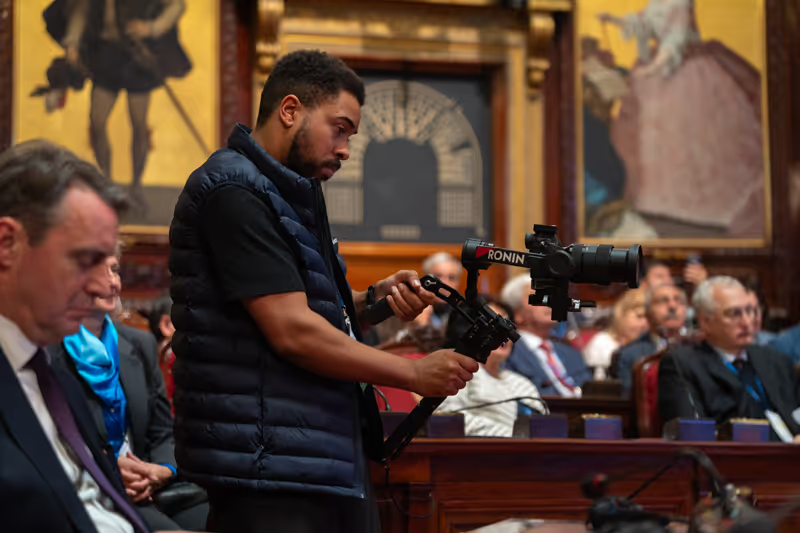
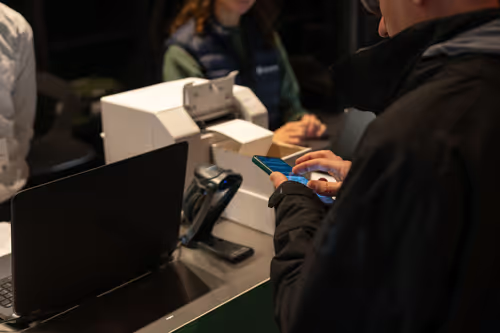
On-site communication helps people orient themselves, make choices, and adapt to what is happening around them. This can take many forms, from signage and printed programmes to screens, live announcements, or mobile updates. The intention is not to repeat what guests already know, but to support them as the event unfolds.
.jpg)
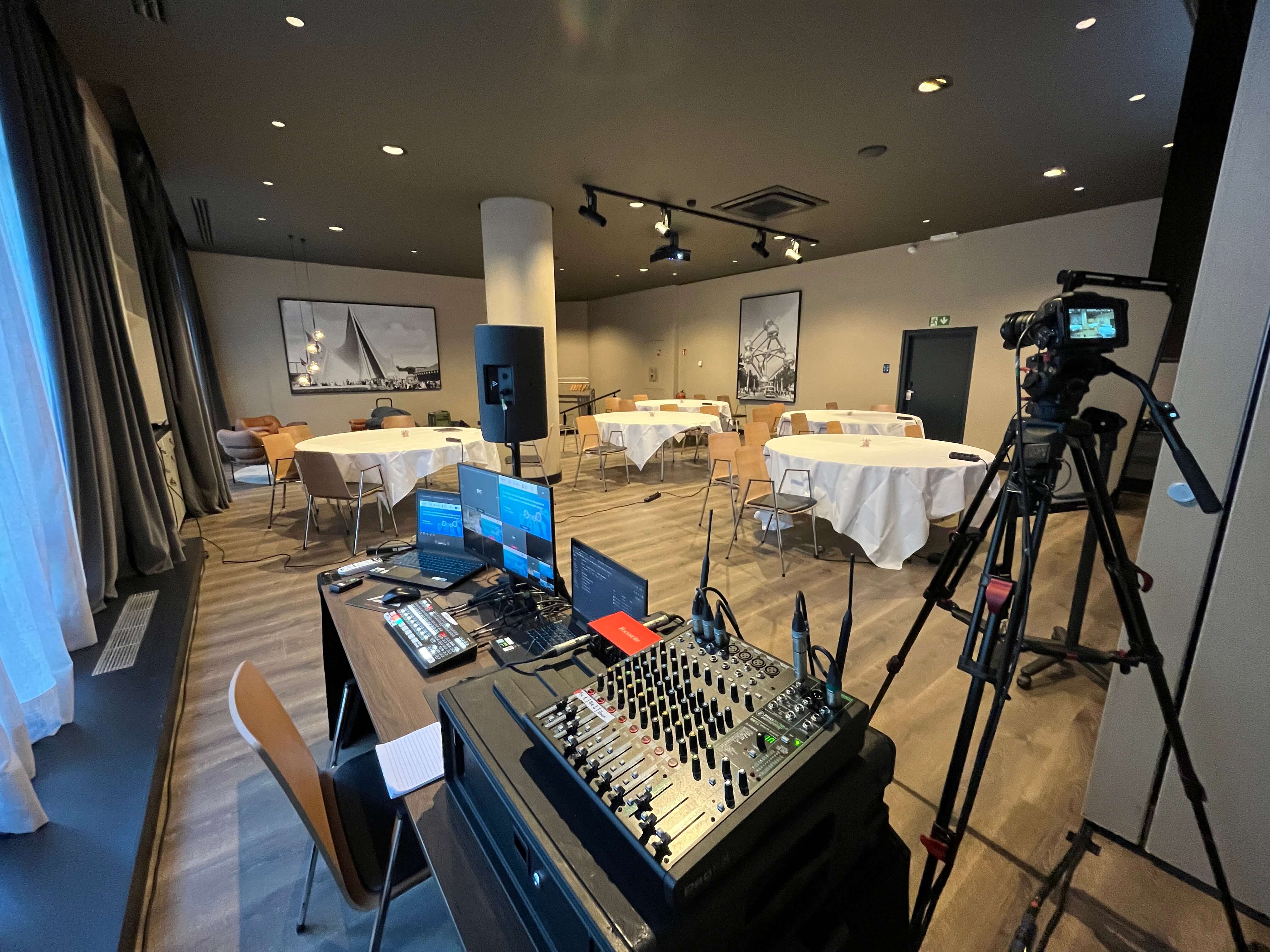
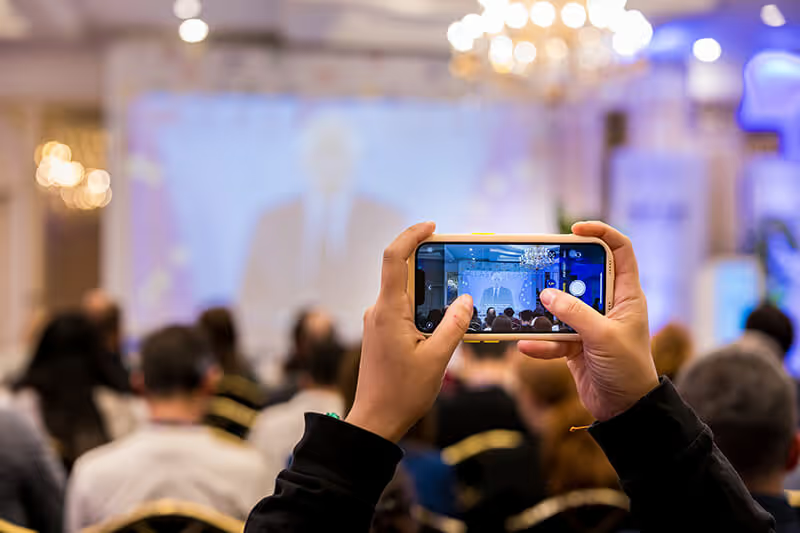
For events with speakers, panels, or live discussions, where part of the audience might not be attending in person, communication can also become part of the activation itself. Introducing speakers, framing sessions, highlighting key moments, or sharing content online helps spread the message to broader audiences. Live communication reinforces why a session matters and helps audiences stay connected, both in the room and beyond it.
In these moments, tone is just as important as clarity. Guests should feel guided, not managed. Small choices in wording, pacing, and design can make a significant difference to how comfortable and engaged people feel.
After the event: extending the conversation
After the event, communication often drops off quickly. That is a missed opportunity.
A thoughtful follow-up helps close the loop while the experience is still fresh. It can acknowledge participation, share recordings or materials, highlight key moments, or invite reflection and feedback. When done well, post-event communication feels like a continuation of the experience rather than an administrative wrap-up.
For public or thought leadership events, this phase is also where content can travel further. Highlights shared through newsletters or social media allow the event to reach people who could not attend, extending its impact beyond the room.
Where communication lives
Email remains central to most events, but it is rarely sufficient on its own. Depending on the audience and objectives, communication may also live on event websites, registration platforms, social media channels, on-site materials, event apps or live messaging tools used during the event.
What matters most is coherence. Guests should always know where to look for information and trust that what they find there is current and reliable. Fragmented communication creates uncertainty, even when the information itself is correct.
Tools should support the experience
There is no shortage of platforms promising to simplify event communication. We regularly test tools to understand how they affect both organisers and guests, from registration systems to event apps and live communication platforms. As we explored in our journal article on event organiser apps, the right tool for your event will depend on your audience, format, and priorities. Technology should follow the communication strategy, not shape it.
Communication as hospitality
When communication is well designed, it reduces friction, builds trust, and helps guests feel considered throughout the entire journey. In that sense, communication is not separate from hospitality. It is one of its most visible expressions.
And that is exactly how we treat it.
Conclusion
Read more
Discover more of our journals, a treasure trove of valuable insights, practical tips, and industry trends that will take your events to the next level.


.jpg)
.jpg)





.avif)